Status Page Monitoring

Monitor third-party status pages and detect vendor incidents before your team wastes time troubleshooting the wrong problem.

  • Monitor 7,000+ cloud services.
  • Early Warning Signals.
  • Private status ingestion.
Status page monitoring
StatusGator APP 18:59 UTC
Critical: Bitbucket Outage Detected
Early Warning Signal triggered. Pipelines failing. 77 mins before official acknowledgment.
Why uptime monitoring misses vendor outages

Uptime monitoring tells you when your systems fail. Status page monitoring tells you when your vendors fail.

Traditional uptime monitoring

  • Checks your own infrastructure.
  • May stay green during SaaS degradation, auth failures, or regional vendor incidents.
  • Detects failure after your users are already affected.
  • Requires manual checking of many vendor pages.

Status Page Monitoring with StatusGator

  • Tracks third-party vendors, SaaS tools, cloud providers, and APIs.
  • Tracks partial outages, degraded APIs, maintenance, and vendor-declared incidents.
  • Can surface issues before official provider acknowledgment in some cases.
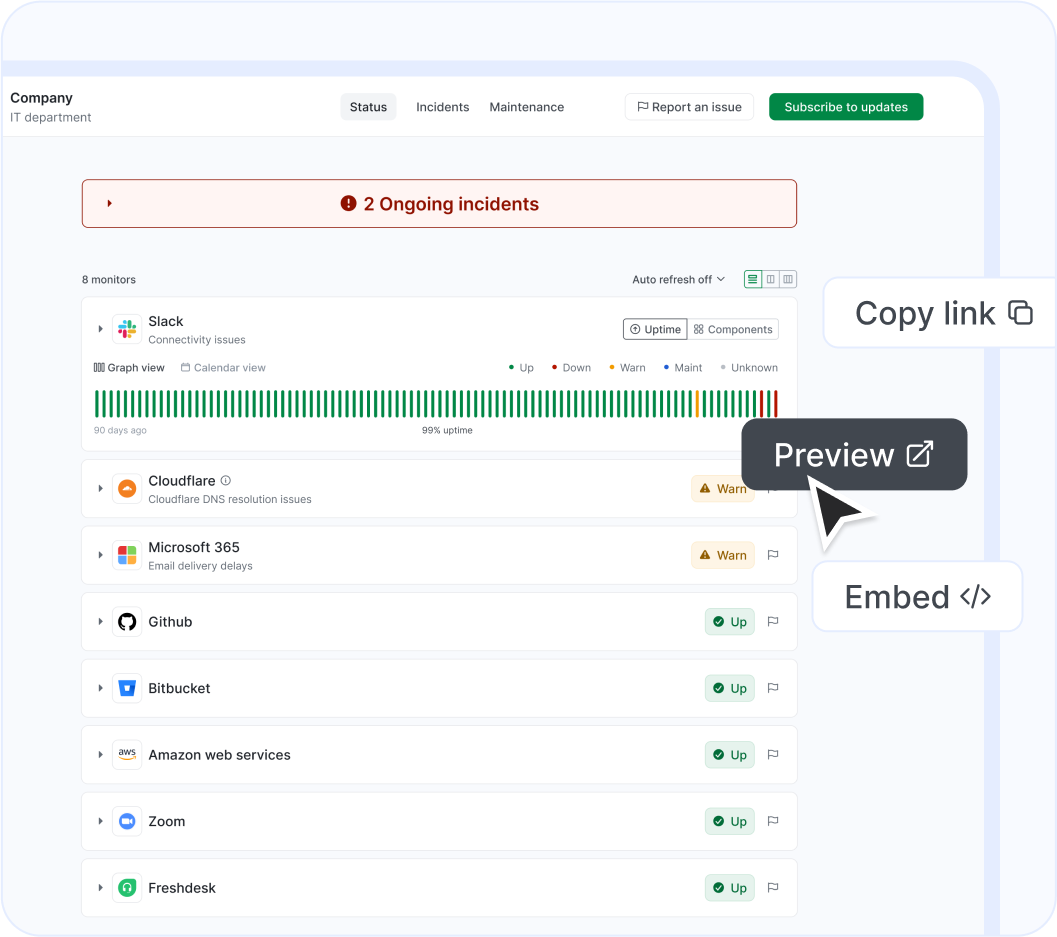
  • Aggregates official status sources into one timeline.

What this looks like during a real outage

StatusGator turns abstract positioning into a concrete operating story.

Bitbucket Outage April 16, 2026

StatusGator detected 77 mins early

18:59 UTC

First user outage reports begin coming into StatusGator.

19:06 UTC

Early Warning Signals triggered based on rising incident reports.

Alert dispatched to #devops-alerts: "Unusual degradation detected at Bitbucket. Check pipelines."
19:30–20:00 UTC

Reports spike globally, indicating widespread disruption.

20:23 UTC

Bitbucket officially acknowledges the incident.

20:38 UTC

Final user reports received as systems begin to recover.

Impact

  • Pipelines failed to start or stalled.
  • Teams saw broken automation while the official status still appeared operational.
  • Support and engineering teams had time to confirm the problem was upstream, not internal.

Why it matters

Without vendor monitoring, teams often spend the first 15–30 minutes troubleshooting the wrong layer.

Early visibility reduces false escalation, duplicate debugging, and avoidable support spikes.

What is status page monitoring?

Status page monitoring is the practice of tracking vendor status pages for outages, maintenance, degradation, and recovery updates. It helps teams know when a dependency is failing without manually checking every provider one by one.

"Dependency monitoring tracks the external vendors, APIs, SaaS tools, and cloud services your systems rely on."

Monitor status pages
Status monitoring of services
Outage representation

What happens during a SaaS outage?

When a vendor has a partial outage, your own monitoring may still look healthy while customers experience real failures. That creates support ticket spikes, false escalation, wasted incident response time, unnecessary rollback investigations, and duplicate debugging across teams.

  • Support gets flooded with "is it just us?" tickets.
  • Engineering starts debugging the wrong layer.
  • Leaders ask for status before the cause is known.
  • Customers blame your product for an upstream problem.

How StatusGator works

1

Add your dependencies

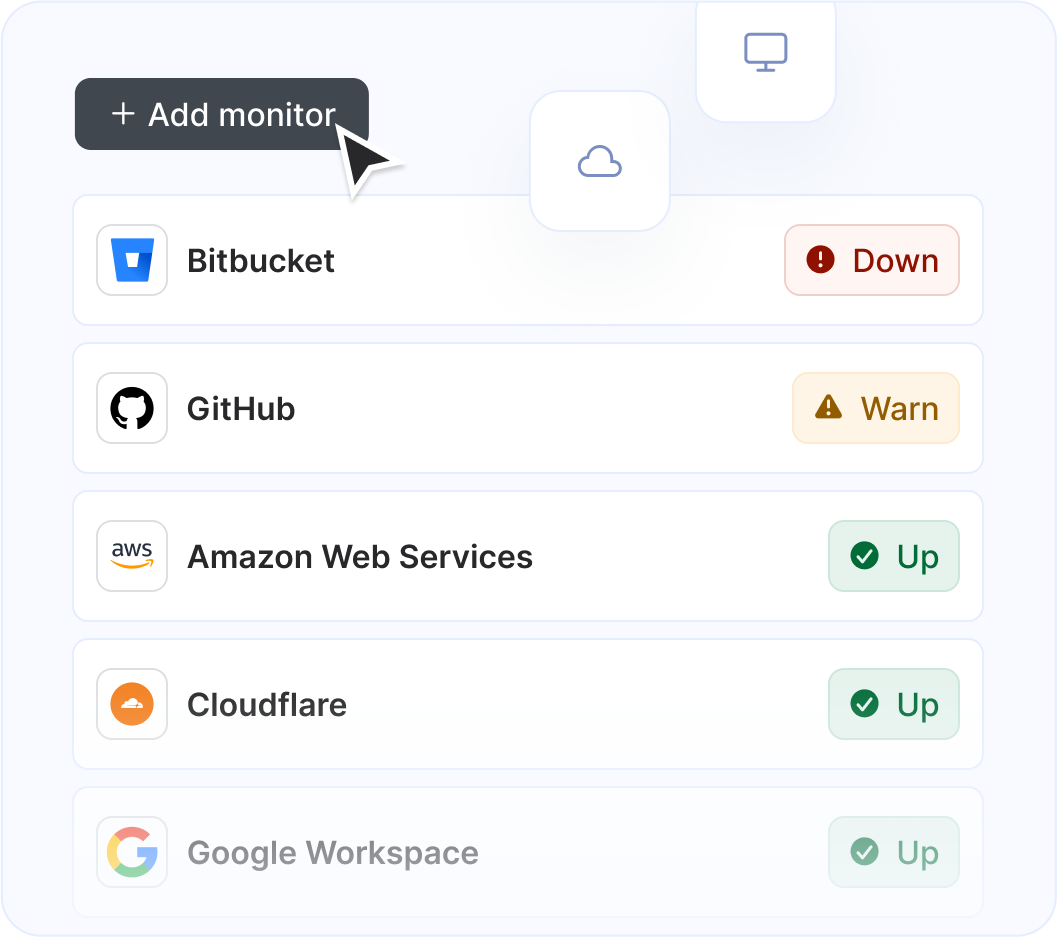
Monitor cloud services, SaaS tools, APIs, websites, and endpoints your business depends on. StatusGator supports service monitors, website monitors, ping monitors, and custom monitors.

2

Watch for changes

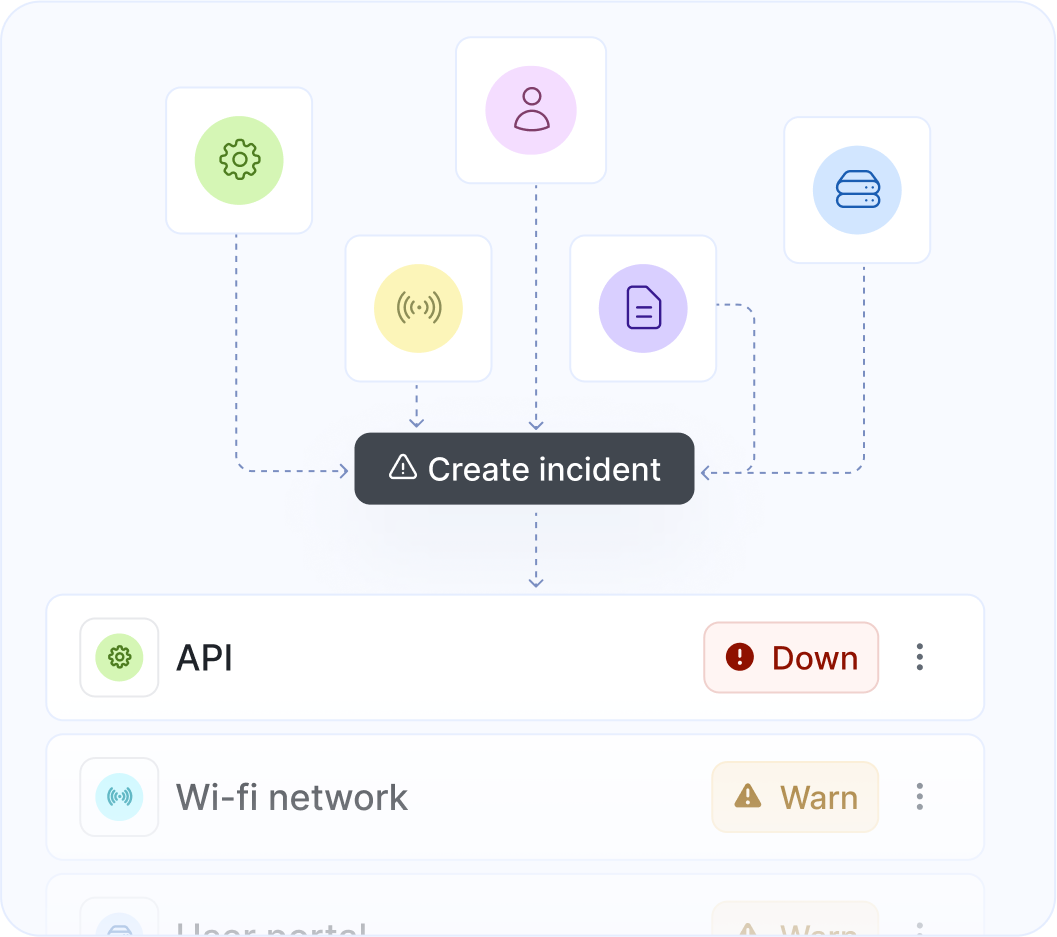
StatusGator checks official status pages, ingests provider updates, and can detect unusual signals when a service does not have a clear public status source. Monitored services are normalized into statuses like Up, Warn, Down, and Maint.

3

Alert the right people

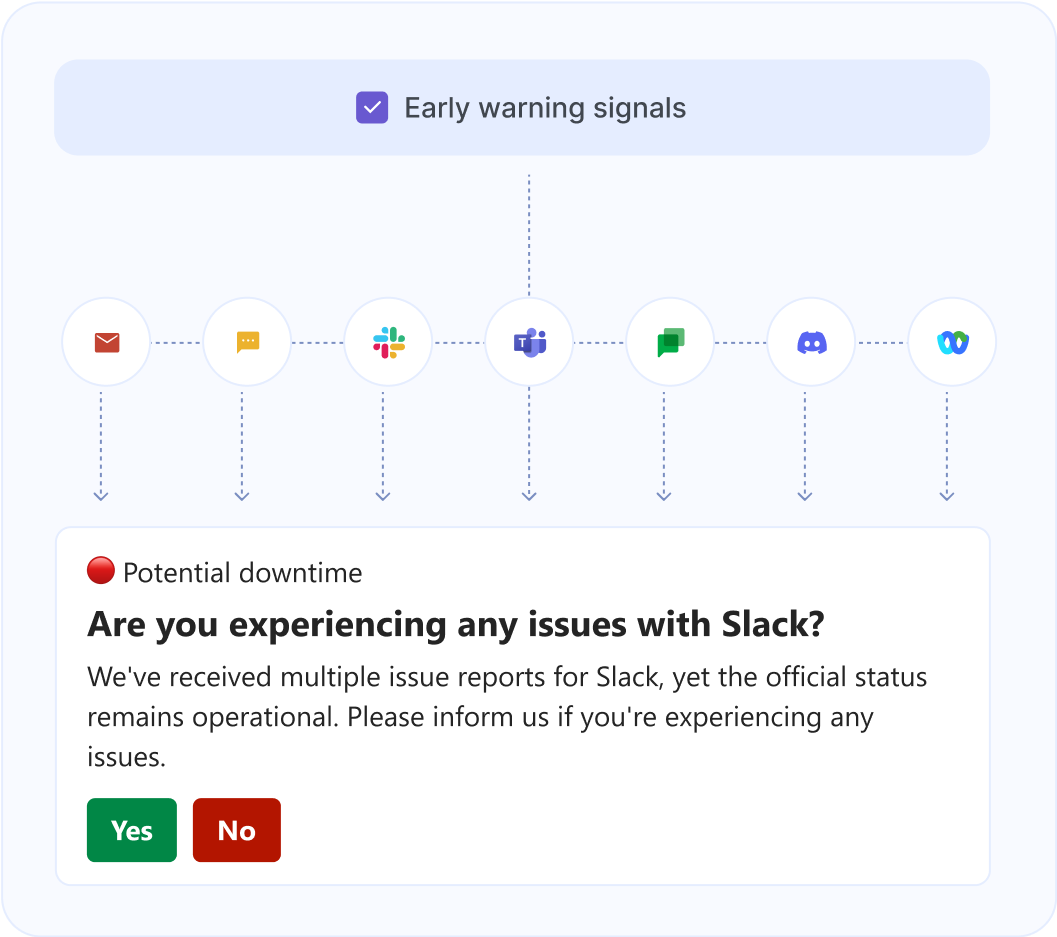
Send notifications to Slack, Microsoft Teams, Google Chat, Discord, email, SMS, webhooks, or incident workflows.

How Early Warning Signals work

Early Warning Signals are alerts generated when StatusGator detects unusual activity that may indicate an outage, often minutes or even hours before the provider officially reports it.

StatusGator says the system analyzes thousands of data points every minute and processes signals every 60 seconds to identify anomalies.

Early Warning Signals explanation

Trusted for dependency monitoring at scale

7,000+
Cloud services monitored.
Unified
Official status pages collected and normalized.
Proactive
Early Warning Signals before provider confirmation.
Context
Historical incident context for trend analysis.

This is vendor outage intelligence: a monitoring layer built for teams that depend on many external services and need faster awareness than a manual status page check can provide.

Why teams choose StatusGator

StatusGator combines broad vendor coverage, normalized status data, historical incident context, private status ingestion, and multi-channel alerting into one workflow. That makes it harder to replace than a single-purpose status page builder or a simple uptime checker.

  • Detect vendor incidents earlier than manual checks.
  • Track long-term reliability with historical outage data.
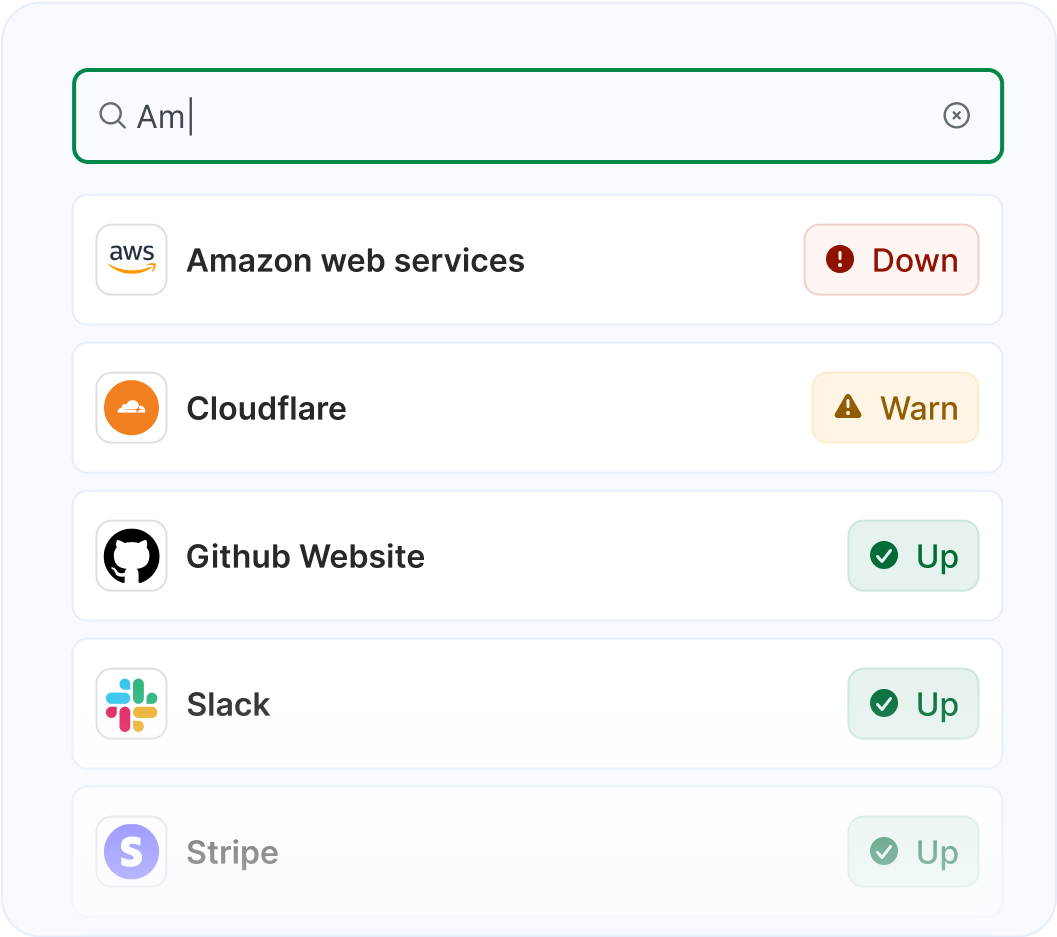
  • Monitor public and private status pages in one place.
  • Route alerts into the tools your team already uses.
  • Reduce confusion during partial or regional outages.
Status page

Built for status page monitoring

Awareness

  • Vendor aggregation.
  • Early Warning Signals.
  • Live incident timeline.

Response

  • Slack, Teams, Discord, Google Chat, email, SMS, webhooks.
  • PagerDuty, ServiceNow, Jira-style operational workflows.
  • Internal and customer-facing communication.

Analysis

  • Historical outage data.
  • Reliability trends.
  • Private status ingestion.
  • Monitor statuses and history.

Who needs status page monitoring

Teams with dozens of SaaS dependencies benefit most from status page monitoring. That includes SaaS operations, IT, DevOps, MSPs, and customer support teams that need a current view of upstream vendor health.

SaaS operations

Track AWS, GitHub, Zoom, OpenAI, Stripe, and other vendors that affect your product experience.

IT and DevOps

Get one view of upstream incidents so your team can respond faster and reduce triage overhead.

MSPs and enterprise teams

Monitor many client environments or business units from separate boards.

Support teams

Answer outage questions with a current vendor status view instead of guessing.

Status page monitoring VS Uptime monitoring

Category What it does Best for
Status page monitoring Monitors third-party vendor status pages and incident updates. Teams that depend on many external services.
Uptime monitoring Checks your own infrastructure and app availability. Internal engineering and infrastructure alerts.
StatusGator Aggregates vendor status sources, adds early warning, and centralizes alerts. Dependency monitoring and outage intelligence.

Stop finding outages from customer tickets

Monitor every dependency from one place, see vendor incidents faster, and keep your team ahead of upstream failures.

Frequently asked questions

What is status page monitoring?
It is the practice of tracking vendor status pages so you know when external services are degraded, down, or under maintenance.
How is it different from uptime monitoring?
Uptime monitoring checks your own systems, while status page monitoring tracks third-party vendors and their incident updates.
What is dependency monitoring?
Dependency monitoring tracks the external vendors, APIs, SaaS tools, and cloud providers your systems rely on.
Can StatusGator detect outages before the vendor posts an official incident?
Yes, Early Warning Signals are designed to flag likely incidents before official confirmation in some cases.
What can I monitor?
Service monitors, website monitors, ping monitors, custom monitors, and vendor status sources.
Does StatusGator support private status feeds?
Yes, private status ingestion is one of the product’s differentiators.
Can I use it for internal and external communication?
Yes, teams can use it for internal dependency awareness and customer-facing status communication.